
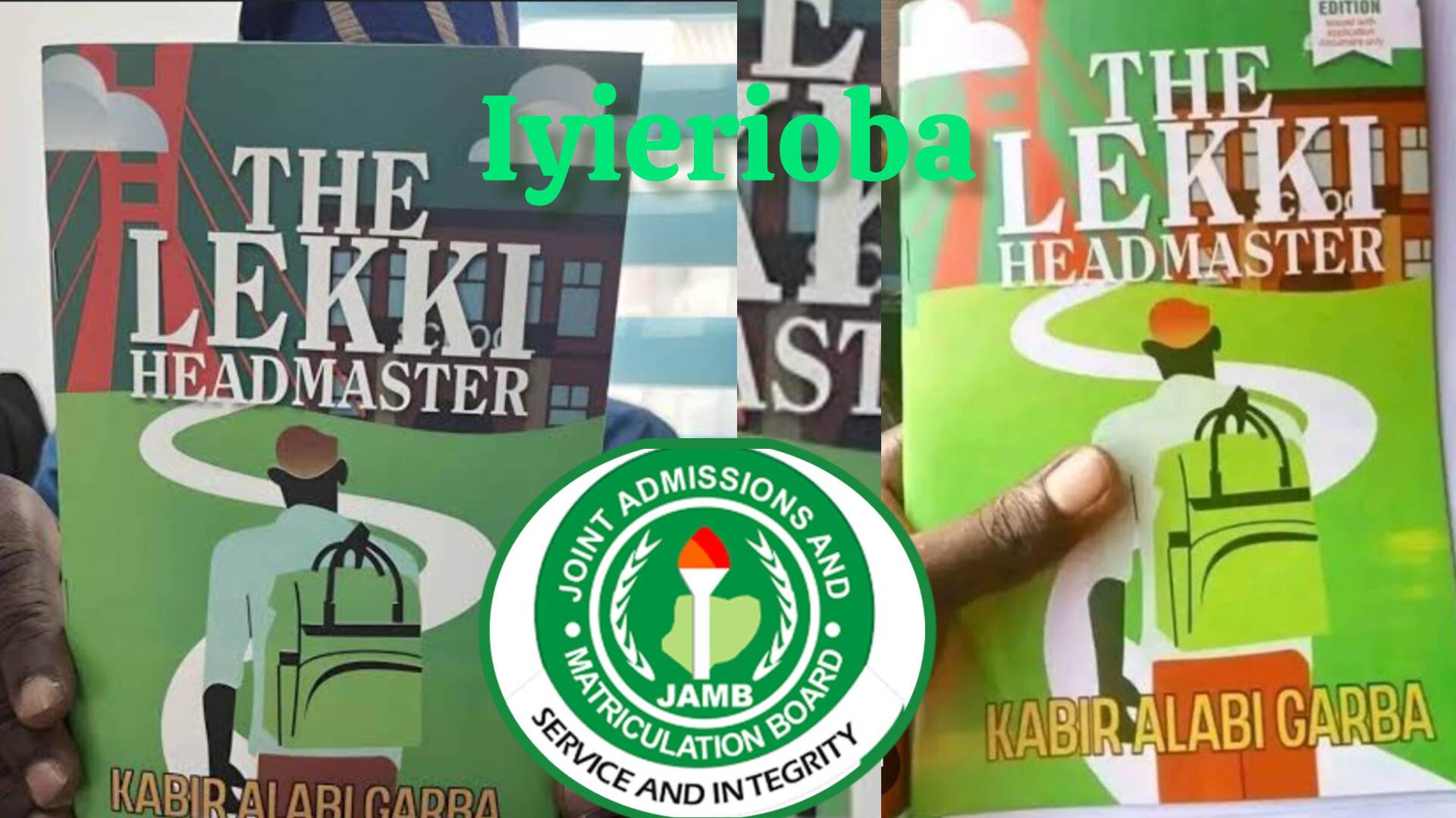
The Lekki Headmaster by Kabir Alabi Garba is the jamb recommended reading textbook for Use of English syllabus for 2027. If you are preparing for the 2027 UTME exam, you need to read the textbook and know the story well enough to answer questions about its plot, characters, themes and style.
This article will give you a clear summary simple English, a look at the important book chapters, a character guidelines, the most major themes, the literary devices that matter, and a short practice quiz. Use it to organise your revision, but remember one thing: a summary cannot replace reading the book. JAMB questions can test small details, and you will only catch those by reading the novel yourself.
Important notices: This site does not host or sell the novel. Get your copy from a legitimate source, as explained in the section on getting the book below.
About the Novel and the Author
The Lekki Headmaster is a Nigerian novel by Kabir Alabi Garba. It narrates the main story of a respected school principal in Lagos who has to decide whether to leave Nigeria to start a new life abroad or remain in the school and community he loves. The book is about work, family, belonging and the pressure that many Nigerians feel to “japa,” the popular word for emigrating in search of a better life.
The story is set in the modern era, during the wave of migration that followed the COVID-19 pandemic. That timing is very necessary. So, many of the situations in the novel, such as visa applications, passport struggles and families split across countries, will feel familiar to Nigerian readers.
Is It Still the JAMB Text?
For the 2027 UTME, JAMB listed The Lekki Headmaster as the reading textbook for Use of English. Some sources suggest it continues for the next cycle, while others say JAMB has not confirmed it. Do not rely on rumours. Check the current Use of English syllabus and information bulletin on JAMB’s official website (jamb.gov.ng) to confirm which text applies to your exam year.
Even if JAMB later changes the text, the skills you build from reading it, such as comprehension, inference and literary analysis, still help in the rest of the English paper.
How to Get the Novel
Many websites offer “free PDF downloads” of the novel. Visit, “DTWStore” to get it for free. But be very careful before purchasing. Copyrighted books shared without the author’s permission are illegal to distribute, and such files can also carry viruses or be incomplete or altered. An altered copy could even leave out scenes that appear in exam questions.
Safer ways to get a proper copy include:
- Buying it from a bookshop or a trusted online bookseller
- Borrowing it from your school or a public library
- Sharing a copy with a study partner
- Checking JAMB’s official announcements and your CBT centre for any approved distribution arrangements
Earlier versions of this article claimed that candidates receive a free copy when registering at a CBT centre. We could not verify that claim, so please confirm directly with JAMB or your centre before counting on it.
Plot Summary
The novel centres on Bepo Adewale, the principal of Stardom Schools, a private school in Lekki, Lagos. Over more than two decades he has become a much-loved figure. His warmth, humour and skill at settling disputes among teachers, students and parents have earned him the nickname “The Lekki Headmaster.”
The story opens in a dramatic way. During a normal morning assembly, Bepo breaks down in tears in front of the students and staff. The shock sends the school into confusion. Staff members contact the school’s managing director, and everyone tries to understand how such a steady leader could suddenly lose control of himself. Bepo gives no clear explanation at first, and the reader is left asking what is troubling him.
From there the novel moves back in time through memories and episodes. We learn that Bepo is under heavy pressure. His wife and children are abroad, and the people around him keep telling him that moving to join them is the obvious and sensible choice. A chance to relocate to the United Kingdom is real, and many of his friends, relatives and acquaintances see it as a way out of Nigeria’s economic difficulties. Bepo, however, is deeply attached to his school, his students, his colleagues and the community he has helped to build. He also has long-term plans for his life and career in Nigeria.
As he considers his choice, the book gives us a series of stories about migration. Some people who leave succeed, some struggle, and some are refused visas. Along the way, Bepo faces the stress of getting travel documents, including the maddening bureaucracy around passport renewal. We also see him dealing with everyday school matters, such as troubled students, anxious parents and staff conflicts. Memories of his earlier working life, including bad experiences in other schools and a failed attempt to run his own school, show why he values honesty and fairness in education.
The novel builds toward his departure from Stardom Schools. There are farewell events, speeches and emotional moments, and Bepo’s mind is full of doubt. In the end, the story affirms the value of his calling and his place in the school and the country. Readers who finish the book should pay close attention to how the author resolves the dilemma and what message it sends about purpose, community and the idea of a “better life.”
Key Chapters
The novel has twelve chapters. Several chapter titles and their main ideas are widely agreed on and are listed below. We have deliberately not invented summaries for chapters we could not verify, because wrong details in your notes can cost you marks. Fill in the remaining chapters yourself while you read, and compare your notes with a trusted study partner.
| Chapter | Title | Main idea |
|---|---|---|
| 1 | Dusk | Bepo breaks down at the school assembly. Staff and the managing director react, and his inner turmoil is hinted at. |
| 2 | The Enticement | The pull of life abroad is explained. Bepo weighs family loyalty and money against his attachment to Stardom Schools. |
| 3 | Migration Tales | Stories of people who left Nigeria show both the hopes and the costs of emigrating. |
| 4 | A Case of Visa Denied | A visa refusal shows the stress, mistrust and disappointment that can surround travel plans. |
| 7 | “Ritualists” | A story involving suspicion and power that raises questions about morality and abuse of authority in school life. |
| 10 | Passport Pains | Bepo struggles with the passport process, which exposes bureaucratic frustration in public services. |
| 12 | Dawn | The conclusion, in which the questions about purpose, community and leaving or staying come to a head. |
As you read, add a short note for every chapter: where it happens, who appears, what changes, and what it says about the main theme. Those four points cover most exam questions.
Characters
Major Character
Bepo Adewale (the Lekki Headmaster): The protagonist. He is a principal who has spent more than two decades at Stardom Schools. He is disciplined, funny, caring and principled. His central struggle is the choice between emigrating and staying. He represents dedication to education and the tension between personal comfort and a sense of purpose.
Other Characters Mentioned in Study Notes
- Mrs. Ibidun Gloss: The managing director of Stardom Schools. She values Bepo’s contribution to the school and responds when his breakdown threatens the school’s calm and reputation.
- Mrs. Grace Apeh: A member of the school team who helps raise the alarm after Bepo’s breakdown.
- Mr. Oyelana: A member of staff in Bepo’s circle at the school.
- Ikenna: A student whose assembly speech is part of the opening scene.
- Tai: An agent who helps Bepo deal with the passport process. He shows how people often rely on middlemen to navigate slow systems.
- Mrs. Ogunwale and her family: Bepo’s landlords, who represent supportive neighbourly relationships.
- Mrs. Ladele and her daughter Bibi: A parent and a student whose story touches on a child’s fears and the school’s duty of care.
- Bepo’s wife and children: They live abroad and are the emotional centre of the pressure on him to leave.
Names and minor roles can differ between study guides, so confirm every character against your own copy of the book.
Themes
1. Migration (the “Japa” Syndrome)
This is the dominant theme. The novel looks at why many Nigerians leave, what they hope to gain, and what they lose. It does not simply praise or condemn emigration. Instead, it shows real reasons on both sides.
2. Dedication to Education and Vocation
Bepo sees teaching as a calling, not just a job. His commitment to his students and school shows the value of purpose and service.
3. Family Loyalty and Responsibility
Bepo’s family is abroad, and their expectations weigh on him. The book explores the pull of duty to one’s household and the question of whether love requires physical closeness.
4. Pressure and Mental Health
The opening breakdown shows how even strong, cheerful leaders carry hidden stress. The novel treats his distress seriously and suggests that people in demanding roles also need care.
5. Corruption and Bureaucracy
The passport process, visa difficulties and some school episodes reveal inefficiency, unfair treatment and abuse of power.
6. Community and Solidarity
Colleagues, parents, students and neighbours support Bepo in various ways. The idea that a person’s value is tied to the people around him runs through the story.
7. Identity and Culture
Visits to historical sites and reflections on history, including the dream set at a museum in Badagry, connect Bepo’s decision to broader questions about heritage and belonging.
8. Integrity and Moral Leadership
Bepo’s past experiences with unethical practices in other schools show why he insists on honesty and fairness. The novel presents integrity as a core quality of a good educator.
Literary Devices and Style
- In medias res: The story starts in the middle of the action with Bepo’s breakdown at assembly, then explains how he got there.
- Flashback: Memories of Bepo’s past jobs and experiences fill in the background and shape the reader’s understanding.
- Dream sequence: A dream, including one set at a heritage museum, reveals his subconscious fears and resistance to leaving.
- Humour and satire: Funny characters and situations lighten the tone while poking fun at social habits and institutional failures.
- Realism: The setting, language and problems are drawn from everyday Nigerian life, which makes the story believable.
- Symbolism: The titles “Dusk” and “Dawn” can be read as symbols of crisis at the start and renewal at the end. This is an interpretation, so be ready to explain your reasoning.
- Contrast: Life abroad versus life in Nigeria, comfort versus purpose, and the school’s calm surface versus Bepo’s inner conflict.
Setting
The main setting is Stardom Schools in Lekki, Lagos, an elite private-school environment. Other locations include homes, offices, historical sites and places connected with passport and visa processes, with at least one episode taking place in Ibadan. The time setting is the present day, shaped by post-pandemic migration. Together, these settings give the novel its modern, urban and socially aware atmosphere.
Lessons from the Novel
- A meaningful career can be worth more than a seemingly easier life elsewhere.
- Big decisions deserve careful thought, not just pressure from other people.
- Leaders also need emotional support.
- Communities are strengthened by people who care.
- Honesty and fairness matter, especially in education.
- Both staying and leaving have costs that should be weighed honestly.
How to Study the Novel for JAMB
- Read it twice. Follow the story the first time. On the second reading, take notes on characters, events, themes and style.
- Make a character sheet. For each character, write who they are, what they do and what they represent.
- Track the timeline. Note which scenes are in the present and which are flashbacks.
- List themes with evidence. For each theme, record at least two events that illustrate it.
- Learn the devices. Practise naming a device and giving an example.
- Use summaries only for revision. They help you recall, not replace reading.
- Test yourself. Answer questions without looking at your notes, then check your answers against the book.
- Link it to the other sections. Reading the novel improves vocabulary and comprehension, which helps the rest of the English paper.
Practice Quiz
These original questions test the basics. Answer all of them before looking at the explanations.
1. Who is the protagonist of The Lekki Headmaster?
A. Mr. Ade B. Bepo Adewale C. Mr. Oyelana D. Ikenna
2. Where does the main action take place?
A. Stardom Schools in Lekki, Lagos B. A village in Kano C. A university in Ibadan D. A hospital in Abuja
3. How does the novel begin?
A. With a wedding B. With Bepo breaking down in tears at a school assembly C. With a school sports day D. With Bepo’s retirement party
4. What is Bepo’s central dilemma?
A. Whether to open a new school B. Whether to change careers C. Whether to emigrate to join his family or stay in Nigeria D. Whether to become a politician
5. Which theme is most strongly linked to the term “japa”?
A. Migration B. Sports C. Religion D. Farming
6. Starting the story with a dramatic scene and then explaining the background through memories is called
A. soliloquy B. in medias res with flashback C. irony D. personification
Quiz Answers
- B (Bepo Adewale). He is the principal of Stardom Schools and the main character. Earlier versions of this article wrongly called the headmaster “Mr. Ade” and the school “Lekki Primary School.” Make sure your notes use the correct names.
- A. Stardom Schools in Lekki, Lagos is the main setting.
- B. The opening scene is his emotional breakdown during assembly.
- C. The story revolves around his choice between relocating abroad and remaining at his school.
- A (Migration). “Japa” is a popular term for leaving Nigeria for better opportunities.
- B. Beginning in the middle of the action and then using flashbacks to explain the background are standard techniques.
Frequently Asked Questions
Who wrote The Lekki Headmaster?
The novel was written by Kabir Alabi Garba.
Is the novel compulsory for JAMB?
If JAMB includes it in the Use of English syllabus for your exam year, you should study it, because questions can be drawn from it. Confirm the current text on JAMB’s official site.
How many chapters does the novel have?
Study guides list twelve chapters, beginning with “Dusk” and ending with “Dawn.” Confirm the exact structure in your own copy.
Who is the main character?
Bepo Adewale, the principal of Stardom Schools.
What is the main theme?
Migration is the leading theme, alongside dedication to education, family loyalty, integrity and community.
Is the story based on a true story?
It is a work of fiction, though it draws on real social conditions in Nigeria. Do not assume particular events actually happened.
Can I pass without reading the novel?
You can answer many English questions without it, but you will lose marks on the novel-based items. Since it is a limited book, reading it carefully is a smart investment.
Where can I find the PDF?
We do not distribute the book. Use a legitimate source such as a bookshop, library or official channel. Unofficial PDFs may be illegal, incomplete or unsafe.
Are chapter summaries enough?
No. They are useful for revision, but exam questions can depend on details, wording and context that only reading the book will give you.
Recommended post:
Conclusion
The Lekki Headmaster is a thoughtful story about a teacher, a school and a hard choice. For the exam, know the main character and setting, the central dilemma, the key chapters, the supporting characters, the major themes and the literary devices. Read the book yourself, keep careful notes, and use summaries like this one only to organise your revision.
If you have questions about any part of the novel, leave a comment and we will do our best to help. Share this guide with classmates who are also preparing for the UTME, and we wish you every success.