
In this article
- WAEC GCE Food and Nutrition 2027/2028 Examination Update
- WAEC GCE Food and Nutrition Examination Areas
- Section A: Food and Nutrition Objective Questions and Answers
- Section B: Food and Nutrition Theory Questions and Answers
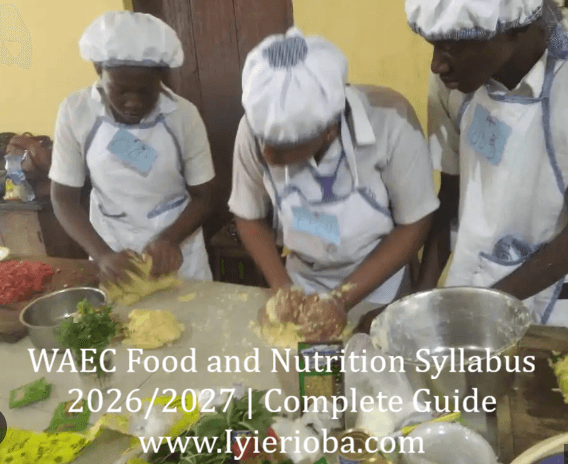
- Section C: Food and Nutrition Practical Revision
- How to Answer WAEC Food and Nutrition Practical Questions
- How to Prepare for WAEC GCE Food and Nutrition 2027/2028
- Related WAEC Food and Nutrition Resources
- Frequently Asked Questions
- Conclusion
WAEC GCE Food and Nutrition Questions and Answers 2027/2028: We want to let you know that this guide helps candidates preparing for the West African Senior School Certificate Examination (WASSCE) for private candidates revise important food and nutrition topics. It covers objective practice questions, theory answers, practical skills, nutrient tests, meal planning, food preservation, kitchen hygiene, and examination preparation.
Food and Nutrition combines scientific knowledge with practical skills. Candidates need to understand nutrients and their functions, select suitable foods, plan balanced meals, prepare food safely, and explain the principles behind different cooking and preservation methods.
The questions and answers in this article are practice materials for revision. They are not leaked WAEC examination questions, and they should not be treated as a prediction of the questions that will appear in the 2027 examination.
If you are looking for additional revision, read our previous WAEC GCE Food and Nutrition Questions and Answers article. You can also review the WAEC Food and Nutrition Objective and Essay Questions resource for more practice material.
CLICK HERE TO GET FULL QUESTIONS AND ANSWERS
WAEC GCE Food and Nutrition 2027/2028 Examination Update
The WAEC GCE is commonly used to refer to the WASSCE for private candidates. Candidates should prepare according to the syllabus and examination instructions for their particular series.
The 2025 examination dates displayed in older versions of this article are no longer current. The exact date and time for a 2027 Food and Nutrition paper should be confirmed through the official timetable for the relevant examination series. Do not assume that a previous year’s date will remain the same.
For official revision material, visit the WAEC Food and Nutrition e-learning page. It contains past examination materials and examiner comments designed to help candidates understand the expected standard of answers.
WAEC GCE Food and Nutrition Examination Areas
Preparation should cover theoretical knowledge and the practical application of Food and nutrition principles. Depending on the examination and syllabus requirements, candidates may need to demonstrate knowledge of the following areas:
- Food nutrients, their functions, and food sources.
- Balanced diets and factors affecting meal planning.
- Food commodities and their nutritional characteristics.
- Cooking methods and the effects of heat on food.
- Food preservation, storage, and prevention of spoilage.
- Kitchen equipment, cleaning, and maintenance.
- Kitchen hygiene, safety, and accident prevention.
- Meal planning for different age groups and circumstances.
- Food preparation, presentation, and service.
- Simple food tests and the interpretation of observations.
We wish to let you know that these are revision areas rather than a guaranteed list of questions for 2027. Use the current syllabus and your teacher’s instructions to guide your study.
Section A: Food and Nutrition Objective Questions and Answers
The following sample multiple-choice questions are designed to help candidates test their understanding of key concepts.
Question 1: Meaning of Food
Which statement best describes food?
- A substance used only to satisfy hunger
- A substance consumed to supply nutrients and support the body’s needs
- A substance that must always contain sugar
- A substance used only for energy production
Correct answer: B.
Explanation: Food supplies nutrients that the body needs for energy, growth, repair and normal functioning. Different foods provide different combinations of nutrients, so a varied diet helps meet nutritional needs.
Question 2: Carbohydrates
Which nutrient is an important source of energy for the body?
- Carbohydrate
- Water
- Minerals
- Vitamin C
Correct answer: A. Carbohydrate.
Explanation: Carbohydrates are an important energy source. Common sources include rice, yam, maize, bread, potatoes, and other starchy foods.
Question 3: Protein
One major function of protein is to:
- Build and repair body tissues
- Provide the body’s only source of energy
- Replace the need for water
- Prevent all infectious diseases
Correct answer: A. Build and repair body tissues.
Explanation: Protein supports growth and tissue repair. Sources include beans, peas, eggs, fish, meat, milk, and other protein-containing foods.
Question 4: Vitamin C
Deficiency of vitamin C can cause:
- Scurvy
- Rickets
- Night blindness
- Goitre
Correct answer: A. Scurvy.
Explanation: Vitamin C is needed for normal collagen formation and other body functions. Severe deficiency can cause scurvy. Sources include citrus fruits, guava, tomatoes and some vegetables.
Question 5: Balanced Diet
A balanced diet is a diet that:
- Contains only foods rich in protein
- Contains all essential nutrients in appropriate amounts for an individual’s needs
- Contains the same foods every day
- Excludes all fats and carbohydrates
Correct answer: B.
Explanation: A balanced diet supplies the nutrients and energy a person needs in suitable proportions. Requirements differ according to factors such as age, activity level, health status and stage of life.
Question 6: Food Preservation
Which method helps preserve food by lowering its temperature and slowing the growth of many microorganisms?
- Refrigeration
- Leaving food uncovered
- Storing cooked food beside raw meat
- Keeping food in direct sunlight without protection
Correct answer: A. Refrigeration.
Explanation: Refrigeration slows the growth of many microorganisms and helps keep suitable foods fresh for longer. It does not sterilise food, so correct storage temperatures and handling remain important.
Question 7: Food Hygiene
Which practice helps reduce the risk of food contamination?
- Using the same unwashed knife for raw meat and ready-to-eat food
- Washing hands before preparing food
- Leaving cooked food uncovered for long periods
- Storing raw meat above uncovered cooked food
Correct answer: B. Washing hands before preparing food.
Explanation: Proper handwashing helps prevent the transfer of harmful microorganisms to food. Clean utensils, safe storage and separation of raw and cooked foods are also important.
Question 8: Cooking Methods
Which cooking method uses steam to transfer heat to food?
- Steaming
- Grilling
- Roasting
- Shallow frying
Correct answer: A. Steaming.
Explanation: Steaming cooks food using hot steam. It can be useful for vegetables and other foods, although nutrient retention depends on the food, cooking time, and preparation method.
Question 9: Minerals
Which mineral is essential for the formation of haemoglobin in red blood cells?
- Iron
- Sodium
- Iodine
- Fluoride
Correct answer: A. Iron.
Explanation: Iron is required to produce hemoglobin, which helps red blood cells carry oxygen. Sources include meat, beans, some leafy vegetables, and iron-fortified foods.
Question 10: Meal Planning
Which factor should be considered when planning meals for a family?
- Only the color of the food
- Age, nutritional needs, budget, and food availability
- Only the cost of cooking utensils
- The need to serve the same portion to every person regardless of age or needs
Correct answer: B.
Explanation: Good meal planning considers nutritional requirements, preferences, age, activity, health needs, budget, and the availability of food. A suitable plan should be practical as well as nutritious.
Section B: Food and Nutrition Theory Questions and Answers
Question 1: Define Food and Nutrients
Answer: Food is any suitable substance consumed to provide nutrients and support the body’s energy, growth, repair, and normal functions. Nutrients are substances in food that the body needs to maintain life and health.
Examples include carbohydrates, proteins, fats, vitamins, minerals, and water. Different foods contain different combinations of these nutrients. Rice is a source of carbohydrates, and fish supplies protein and some fats, while fruits and vegetables provide varying amounts of vitamins, minerals, water, and dietary fibre.
Question 2: Classify the Main Nutrients and State Their Functions
| Nutrient | Main functions | Examples of food sources |
|---|---|---|
| Carbohydrates | Provide an important source of energy. | Rice, yam, maize, bread, and potatoes. |
| Proteins | Support growth, tissue repair, and the production of body substances. | Beans, eggs, fish, meat and milk. |
| Fats | Provide concentrated energy, support cell functions, and help the body absorb vitamins A, D, E and K. | Vegetable oils, nuts, seeds, avocado and some animal foods. |
| Vitamins | Support normal body processes and help maintain health. | Fruits, vegetables, eggs and other foods, depending on the vitamin. |
| Minerals | Support functions such as bone formation, fluid balance and oxygen transport. | Milk, beans, meat, fish, vegetables and other foods. |
| Water | Supports hydration, temperature regulation, transport of substances and other body processes. | Drinking water, soups, fruits and other foods and drinks. |
Dietary fibre is also important for digestive health. It is found in foods such as vegetables, fruits, legumes and whole grains.
Question 3: What Is a Balanced Diet? State Five Factors That Affect Meal Planning
Answer: A balanced diet provides the energy and essential nutrients a person needs in appropriate amounts for their individual requirements.
Factors that affect meal planning include:
- Age: Nutritional needs change during infancy, childhood, adolescence, adulthood and old age.
- Activity level: People who perform physically demanding work or exercise regularly may require more energy than people with lower activity levels.
- Income and budget: The amount of money available affects which foods a household can purchase.
- Food availability: Seasonal produce, local markets and the availability of particular ingredients influence meal choices.
- Health and special needs: Allergies, medical advice, pregnancy and other individual circumstances may affect suitable food choices.
Other considerations include religious or cultural preferences, family size, cooking facilities, food preparation time and personal taste.
Question 4: Explain Five Methods of Food Preservation
Answer: Food preservation involves methods used to delay spoilage and help maintain the safety or quality of food.
- Refrigeration: Keeping suitable foods at a low temperature slows the growth of many microorganisms. Perishable foods still need correct storage and should not be kept indefinitely.
- Freezing: Freezing slows microbial growth and can preserve many foods for longer periods. Proper packaging helps protect food quality.
- Drying: Removing moisture reduces the conditions needed by many microorganisms to grow. Examples include dried fish, grains and some fruits.
- Canning: Food is processed and sealed in suitable containers using a method designed to achieve safe preservation. Correct processing is essential because improperly canned food can be dangerous.
- Salting or curing: Salt is used in certain preservation processes to reduce available moisture and help control spoilage. The method must be appropriate for the particular food.
Other methods include pasteurisation, fermentation, pickling and the use of approved preservatives. The best method depends on the food, storage conditions and intended period of preservation.
Question 5: State Five Rules of Kitchen Hygiene
Answer:
- Wash hands with soap and clean water before handling food and after handling raw ingredients or using the toilet.
- Clean food preparation surfaces, utensils and equipment before and after use.
- Separate raw meat, poultry and seafood from cooked or ready-to-eat food.
- Cook foods thoroughly and store perishable foods at appropriate temperatures.
- Use safe water and fresh ingredients, and protect food from insects, pests and other sources of contamination.
These measures help reduce foodborne illness. For additional guidance, consult the World Health Organization’s food safety information and its advice on safe food handling.
Question 6: Explain Four Cooking Methods and Give One Example of Each
Answer:
- Boiling: Food is cooked in liquid at its boiling point. An example is boiling rice or yam.
- Steaming: Food is cooked by hot steam rather than being fully immersed in water. An example is steaming vegetables.
- Frying: Food is cooked using hot fat or oil. Examples include frying eggs or preparing akara.
- Baking: Food is cooked using dry heat in an oven. Examples include bread, cakes and some pastries.
Other methods include roasting, grilling, poaching, stewing and pressure cooking. Each method affects the texture, flavour, cooking time and nutritional quality of food differently.
Section C: Food and Nutrition Practical Revision
Practical preparation requires more than memorising definitions. Candidates should practise following instructions, handling equipment, planning meals, preparing food hygienically and presenting results clearly.
1. Food Tests and Expected Observations
| Food component | Test or reagent | Positive observation |
|---|---|---|
| Starch | Iodine solution | A blue-black colour develops. |
| Reducing sugar | Benedict’s solution, with heating under suitable laboratory conditions | A colour change from blue towards green, yellow, orange or brick-red may occur, depending on the amount present. |
| Protein | Biuret test reagents | A violet or purple colour develops. |
| Fat or oil | Suitable lipid test, such as the ethanol emulsion test | A milky or cloudy emulsion forms in the appropriate test. |
Practical tip: Record both the observation and the inference. The observation describes what you see, while the inference identifies what the result suggests is present. Follow your teacher’s instructions for the correct reagents, procedure and safety precautions. Do not taste laboratory samples or chemicals.
2. Meal Planning Practice
A meal plan should consider nutritional needs, variety, cost, food availability, cooking facilities and the time available for preparation. Candidates may be asked to plan meals for a family, a child, an adolescent, an older adult or another group with specified needs.
The following is an illustrative one-day menu for revision. It is not a prescribed diet for every person.
| Meal | Example menu | Nutritional contribution |
|---|---|---|
| Breakfast | Oats or another cereal with milk and a serving of fruit | Can provide carbohydrate, protein, calcium and fibre, depending on the ingredients. |
| Lunch | Rice, beans, vegetables and a suitable protein food | Provides a combination of energy, protein, vitamins, minerals and fibre. |
| Snack | Fruit or a small serving of nuts, where suitable | Can add fibre and other nutrients to the day’s intake. |
| Dinner | Boiled yam or another staple, fish or beans, and vegetables | Combines an energy source with protein and other nutrients. |
When answering a meal-planning question, explain why the selected foods are suitable. Consider the needs stated in the question rather than assuming every person requires the same portions or menu.
3. Food Storage and Preservation
Different foods require different storage conditions. Dry foods such as grains should be kept in clean, dry, covered containers. Perishable foods such as fresh meat and many dairy products require appropriate refrigeration. Frozen foods should remain frozen until needed and should be packaged to maintain quality.
Food should be labelled where necessary, and storage areas should be kept clean. Check the condition of food before use and follow safe handling guidance. Do not assume that smell or appearance alone can establish whether food is safe to eat.
4. Kitchen Equipment and Safety
Candidates should know the uses and care of common kitchen equipment, including knives, chopping boards, weighing scales, measuring jugs, saucepans, sieves, graters, ovens and refrigerators.
Important safety practices include:
- Use knives and sharp tools carefully and store them safely.
- Keep floors dry and walkways clear to reduce falls.
- Use oven gloves or suitable protection when handling hot equipment.
- Keep electrical equipment away from water and follow the manufacturer’s instructions.
- Turn off heat sources when they are no longer required.
- Clean equipment properly and store it in a suitable place.
How to Answer WAEC Food and Nutrition Practical Questions
Read the instructions before beginning. Identify the task, list the equipment or ingredients required, and organise the steps in a logical order.
For questions that ask for observations, write what was actually seen during the test. For questions that require an inference, explain what the observation indicates. When planning meals, state the menu clearly and justify your choices using relevant nutritional principles.
Where a practical question involves food preparation, consider hygiene, safe handling, suitable cooking methods, efficient use of time and neat presentation. Do not invent observations or claim to have performed a test that was not carried out.
How to Prepare for WAEC GCE Food and Nutrition 2027/2028
- Study the current syllabus: Use the topics listed in your syllabus to organise revision and identify areas that need more work.
- Practise objective questions: Answer questions without checking the answers first, then review any mistakes.
- Write theory answers: Practise definitions, explanations, comparisons and structured responses under timed conditions.
- Revise practical skills: Practise meal planning, food tests, kitchen hygiene and the correct use of equipment under supervision.
- Use past examination resources: Read WAEC’s Food and Nutrition e-learning materials to review past questions and examiner comments.
- Prepare a revision timetable: Assign time to nutrients, meal planning, food preservation, cooking methods and practical work.
- Check official announcements: Confirm your examination date and instructions through WAEC rather than relying on old dates shared online.
Related WAEC Food and Nutrition Resources
Continue your revision with these related articles on Iyierioba.com:
- WAEC GCE Food and Nutrition Questions and Answers – previous examination revision material.
- WAEC Food and Nutrition Objective and Essay Questions – additional practice for theory and objective preparation.
- WAEC GCE Food and Nutrition Practical Questions – practical preparation and related revision topics.
For an authoritative reference, use the official WAEC Food and Nutrition e-learning page. Past questions are useful for practice, but they do not guarantee that the same questions will appear in a future examination.
Frequently Asked Questions
Are WAEC GCE Food and Nutrition 2026/2027 questions and answers available?
This article provides practice questions and suggested answers for revision. It does not claim to contain a verified official question paper or answer key for a future examination. Use official resources and your current syllabus to prepare.
What topics should I study for Food and Nutrition?
Revise nutrients and their functions, balanced diets, meal planning, cooking methods, food preservation, food storage, kitchen hygiene, food safety, kitchen equipment and practical food tests. Use the current syllabus to determine the full scope of your preparation.
How do I prepare for the practical component?
Practise following instructions, planning suitable meals, handling equipment safely, maintaining hygiene and explaining the principles behind food preparation. Ask your teacher to supervise practical exercises and correct mistakes.
Where can I find official past questions and examiner comments?
Visit the WAEC Food and Nutrition e-learning resource. It provides past examination materials and examiner observations to help candidates understand expected standards.
When will the 2027 WAEC GCE Food and Nutrition examination hold?
The date depends on the official timetable for the relevant examination series. Check WAEC’s published timetable and follow your registration and examination instructions. Do not rely on dates from the 2025 examination.
Conclusion
Preparing for WAEC GCE Food and Nutrition requires a good understanding of nutrients, balanced diets, meal planning, food preparation, preservation and hygiene. Candidates should practise objective questions, write structured theory answers and develop practical skills through supervised exercises.
Use this guide alongside your current syllabus, class notes and official WAEC resources. For additional revision, visit our previous Food and Nutrition questions and answers article and the official WAEC Food and Nutrition e-learning page.
Start preparing early, practise consistently and verify examination information through official sources. Careful preparation and a clear understanding of the subject are more dependable than unverified claims about leaked questions or guaranteed answers.