
If you are sitting for the WAEC First Series GCE Biology 2026, this guide will help you prepare thoroughly. The WAEC 2026 GCE Biology Jan/Feb (Obj, Essay/Practical) Questions and Answers is one of the most important science papers for private candidates preparing for university admission in Nigeria and beyond. Every year, thousands of candidates register for Biology, yet many struggle, not because Biology is too difficult, but because they fail to understand how WAEC sets its questions, especially in practical biology and application-based topics.
This guide will help you prepare thoroughly. It covers exam overview, objectives, essay questions, practical biology expectations, real exam tips, and proven strategies to help you pass confidently.
Whether you are writing Biology for the first time or re-sitting to improve your grade, this article is designed to help you study smart and avoid costly mistakes.
Overview of WAEC 2026 GCE Biology Jan/Feb (Obj, Essay/Practical) Questions and Answers
Biology is a core science subject in WAEC GCE, testing candidates on living organisms, life processes, ecology, genetics, and human health. WAEC does not only test memorization but also evaluates your ability to observe, analyze, and apply biological principles.
WAEC First Series GCE 2026 Biology Exam Structure
The Biology examination is divided into three major parts:
-
Paper 1: Objective (Multiple Choice)
-
Paper 2: Essay (Theory)
-
Paper 3: Practical Biology
Each paper carries significant marks, and failure in any one can affect your overall grade.
What WAEC Tests in GCE Biology
The WAEC Biology exam assesses candidates’ ability to:
-
Understand biological concepts and definitions
-
Apply biological knowledge to everyday life
-
Identify organisms, structures, and specimens
-
Interpret diagrams and experiments
-
Demonstrate practical and observational skills
WAEC often repeats topics, not exact questions. This means understanding concepts is far more important than cramming past questions.
WAEC Jan/Feb GCE Biology 2026 Objective Questions
Objective questions test speed, accuracy, and conceptual understanding. Most questions are drawn from frequently repeated topics such as nutrition, ecology, reproduction, genetics, and human systems.
Sample Biology Objective Questions & Answers
1. Which of the following is the basic unit of life?
A. Tissue
B. Organ
C. Cell ✅
D. System
2. Photosynthesis takes place mainly in the:
A. Root
B. Stem
C. Flower
D. Leaf ✅
3. Which gas is released during photosynthesis?
A. Carbon dioxide
B. Nitrogen
C. Oxygen ✅
D. Hydrogen
4. The process by which organisms maintain a constant internal environment is called:
A. Respiration
B. Excretion
C. Homeostasis ✅
D. Nutrition
5. Which of the following organisms shows parasitic nutrition?
A. Green plant
B. Mushroom
C. Tapeworm ✅
D. Amoeba
Exam Tip: Read every question carefully. WAEC often includes options that look correct but are biologically inaccurate.
WAEC Jan/Feb GCE Biology 2026 Essay Questions & Answers
Essay questions carry high marks and require clear explanations, neat diagrams (where necessary), and logical presentation.
Question 1: Explain the Process of Photosynthesis
Answer:
Photosynthesis is the process by which green plants manufacture their own food using carbon dioxide, water, and sunlight in the presence of chlorophyll.
The process takes place mainly in the leaves and can be represented by the equation:
Carbon dioxide + Water → Glucose + Oxygen
Photosynthesis occurs in two stages:
-
Light-dependent stage
-
Light-independent stage
This process is important because it provides food for plants, releases oxygen needed for respiration, and forms the basis of food chains.
Question 2: State and Explain the Types of Nutrition
Answer:
Nutrition is the process by which organisms obtain and utilize food.
The main types of nutrition are:
-
Autotrophic nutrition: Organisms make their own food (e.g., green plants).
-
Heterotrophic nutrition: Organisms depend on others for food (e.g., animals).
-
Holozoic
-
Parasitic
-
Saprophytic
-
Each type supports survival and growth depending on the organism’s lifestyle.
Question 3: Explain the Importance of Biology to Man
Answer:
Biology is important to humans in many ways, including:
-
Understanding the human body and health
-
Improving agriculture and food production
-
Controlling diseases
-
Environmental conservation
-
Biotechnology and medicine
Biology helps improve the quality of life and promotes sustainable development.
WAEC GCE Biology Practical – What to Expect
Biology practical is one of the most feared sections, yet it is highly predictable. WAEC tests observation, identification, drawing, and experimentation.
Common Practical Areas Include:
-
Identification of plants and animals
-
Drawing and labeling specimens
-
Experiments on food tests
-
Ecological instruments
-
Microscope or model interpretation

FIG. 1
-
After specimen descriptions
-
Under practical experiment explanations
-
Beside labeled biological diagrams
WAEC Jan/Feb GCE 2026 Biology Practical Sample Question
Question:
Identify the specimen provided and state two observable features.
Answer:
The specimen is a cockroach.
Observable features:
-
Presence of three body segments (head, thorax, abdomen)
-
Six jointed legs attached to the thorax

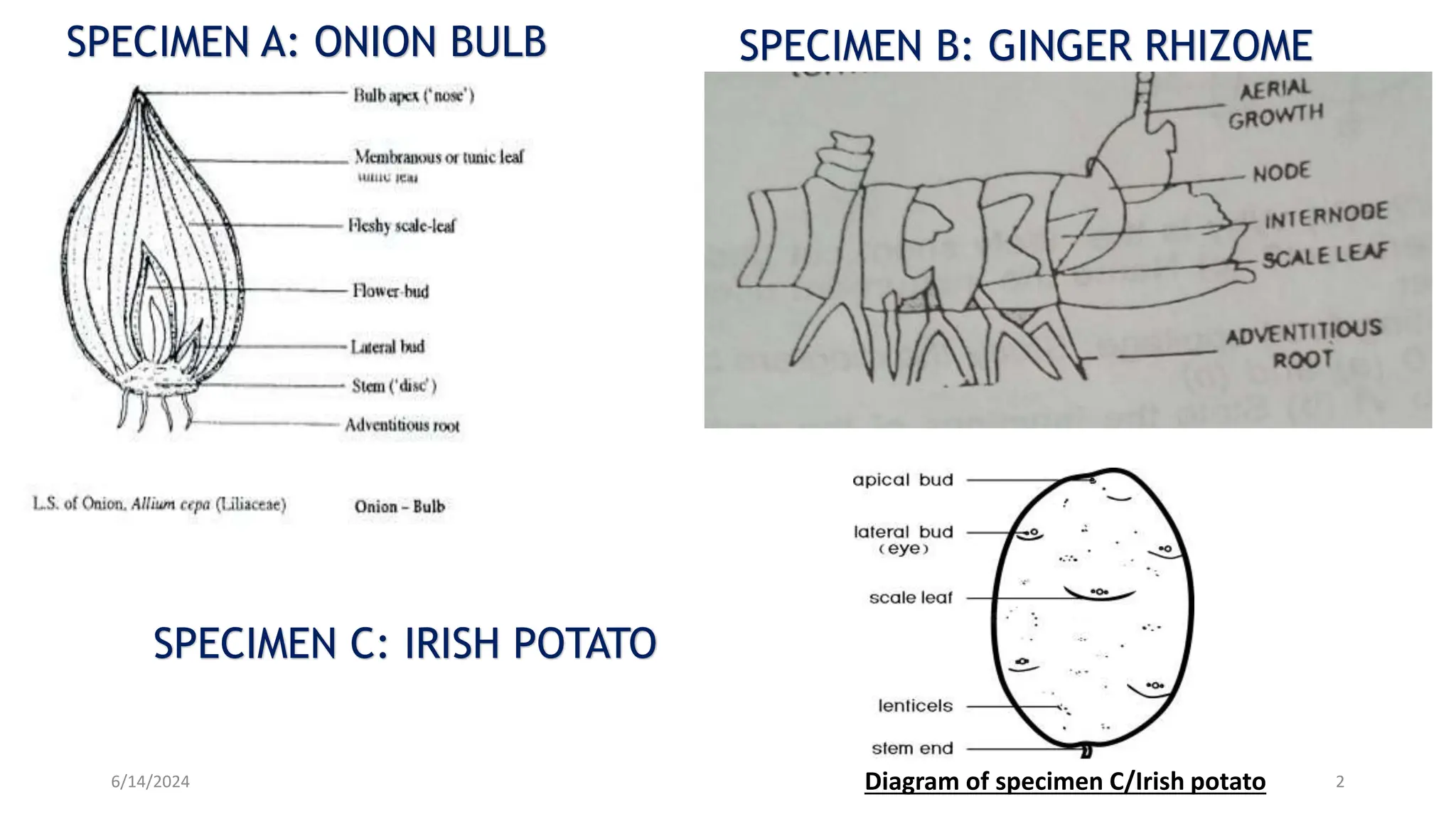
FIG. 2
Tips to Pass WAEC GCE Biology Jan/Feb 2026
To perform excellently in Biology, candidates should:
-
Study WAEC Biology syllabus thoroughly
-
Practice drawing neat and well-labeled diagrams
-
Understand experiments, not just results
-
Revise past questions frequently
-
Manage time effectively during exams
Common Mistake: Writing long stories instead of clear biological points. WAEC awards marks per point.
Why Biology Is Important for GCE Candidates
Biology is compulsory for many science-related courses such as Medicine, Nursing, Pharmacy, Agriculture, and Environmental Science. A good Biology grade significantly increases your chances of admission.
WAE GCE Biology Jan/Feb 2026 TIMETABLE
One of the most commonest mistakes seen among students/Candidates is that most times they forget their Exam time, which in turn makes them to be a haste to the EXAMINATION VENUE; Below is the Exam Timetable to always rehearse:
Here is the WAEC Jan/Feb GCE 2026 Timetable arranged neatly in a clear TABULAR FORMAT, suitable for Candidates:
READ ALSO:
WAEC Biology Practical Specimen 2026/2027: Complete Guide, Specimen List, Likely Questions
WAEC Biology Syllabus 2026/2027 | Recommended Textbooks
WAEC GCE Biology Jan/Feb 2026 (Timetable)
Thursday, 29 January 2026
| Subject | Paper Code | Paper Title | Duration | Time |
|---|---|---|---|---|
| Biology | PC5042 | Biology 2 (Essay) | 1 hr 40 mins | 9:30am – 11:10am |
| Biology | PC5041 | Biology 1 (Objective) | 50 mins | 11:10am – 12:00pm |
| Biology | PC5043 | Biology 3 (Alternative to Practical Work) | 2 hrs | 2:00pm – 4:00pm |
Friday, 30 January 2026
| Subject | Paper Code | Paper Title | Duration | Time |
|---|---|---|---|---|
| Financial Accounting | PC1042 | Financial Accounting 2 (Theory & Practice) | 2 hrs 30 mins | 9:30am – 12:00pm |
| Financial Accounting | PC1041 | Financial Accounting 1 (Objective) | 1 hr | 12:00pm – 1:00pm |
Saturday, 31 January 2026
| Subject | Paper Code | Paper Title | Duration | Time |
|---|---|---|---|---|
| Mathematics | PC4022 | General Mathematics / Core Maths 2 (Essay) | 2 hrs 30 mins | 9:30am – 12:00pm |
| Mathematics | PC4021 | General Mathematics / Core Maths 1 (Objective) | 1 hr 30 mins | 2:00pm – 3:30pm |
Tuesday, 3 February 2026
| Subject | Paper Code | Paper Title | Duration | Time |
|---|---|---|---|---|
| Agricultural Science | PC5022 | Agric Science 2 (Essay) | 2 hrs 10 mins | 9:30am – 11:40am |
| Agricultural Science | PC5021 | Agric Science 1 (Objective) | 50 mins | 11:40am – 12:30pm |
| Agricultural Science | PC5023 | Agric Science 3 (Alternative to Practical Work) | 1 hr 30 mins | 2:00pm – 3:30pm |
Wednesday, 4 February 2026
| Subject | Paper Code | Paper Title | Duration | Time |
|---|---|---|---|---|
| Christian Religious Studies | PC2022 | CRS 2 (Essay) | 2 hrs | 9:30am – 11:30am |
| Christian Religious Studies | PC2021 | CRS 1 (Objective) | 1 hr | 11:30am – 12:30pm |
| Islamic Studies | PC2082 | Islamic Studies 2 (Essay) | 2 hrs | 9:30am – 11:30am |
| Islamic Studies | PC2081 | Islamic Studies 1 (Objective) | 1 hr | 11:30am – 12:30pm |
Thursday, 5 February 2026
| Subject | Paper Code | Paper Title | Duration | Time |
|---|---|---|---|---|
| Physics | PC5122 | Physics 2 (Essay) | 1 hr 30 mins | 9:30am – 11:00am |
| Physics | PC5121 | Physics 1 (Objective) | 1 hr 15 mins | 11:00am – 12:15pm |
| Physics | PC5123 | Physics 3 (Alternative to Practical Work) | 2 hrs 45 mins | 2:00pm – 4:45pm |
Friday, 6 February 2026
| Subject | Paper Code | Paper Title | Duration | Time |
|---|---|---|---|---|
| Geography | PC2042 | Geography 2 (Essay) | 2 hrs | 9:30am – 11:30am |
| Geography | PC2041 | Geography 1 (Objective) | 1 hr | 11:30am – 12:30pm |
| Geography | PC2043 | Geography 3 (Practical & Physical Geography) | 1 hr 50 mins | 3:30pm – 5:20pm |
Saturday, 7 February 2026
| Subject | Paper Code | Paper Title | Duration | Time |
|---|---|---|---|---|
| English Language | PC3022 | English 2 (Essay) | 2 hrs | 9:30am – 11:30am |
| English Language | PC3021 | English 1 (Objective) | 1 hr | 11:30am – 12:30pm |
| English Language | PC3023/B | English 3 (Test of Orals) | 45 mins | 2:00pm – 2:45pm |
Monday, 9 February 2026
| Subject | Paper Code | Paper Title | Duration | Time |
|---|---|---|---|---|
| Chemistry | PC5052 | Chemistry 2 (Essay) | 2 hrs | 9:30am – 11:30am |
| Chemistry | PC5051 | Chemistry 1 (Objective) | 1 hr | 11:30am – 12:30pm |
| Chemistry | PC5053 | Chemistry 3 (Alternative to Practical Work) | 1 hr 30 mins | 2:00pm – 3:30pm |
Tuesday, 10 February 2026
| Subject | Paper Code | Paper Title | Duration | Time |
|---|---|---|---|---|
| Literature-in-English | PC2102 | Literature 2 (Prose) | 1 hr 15 mins | 9:30am – 10:45am |
| Literature-in-English | PC2101 | Literature 1 (Objective) | 1 hr | 10:45am – 11:45am |
Wednesday, 11 February 2026
| Subject | Paper Code | Paper Title | Duration | Time |
|---|---|---|---|---|
| Further Mathematics | PC4012 | Further Maths 2 (Essay) | 2 hrs 30 mins | 9:30am – 12:00pm |
| Further Mathematics | PC4011 | Further Maths 1 (Objective) | 1 hr 30 mins | 2:00pm – 3:30pm |
Thursday, 12 February 2026
| Subject | Paper Code | Paper Title | Duration | Time |
|---|---|---|---|---|
| Economics | PC2032 | Economics 2 (Essay) | 2 hrs | 9:30am – 11:30am |
| Economics | PC2031 | Economics 1 (Objective) | 1 hr | 11:30am – 12:30pm |
| Literature-in-English | PC2103 | Literature 3 (Drama & Poetry) | 2 hrs 30 mins | 2:00pm – 4:30pm |
Friday, 13 February 2026
| Subject | Paper Code | Paper Title | Duration | Time |
|---|---|---|---|---|
| Government | PC2052 | Government 2 (Essay) | 2 hrs | 9:30am – 11:30am |
| Government | PC2051 | Government 1 (Objective) | 1 hr | 11:30am – 12:30pm |
| Commerce | PC1032 | Commerce 2 (Essay) | 2 hrs | 3:30pm – 5:30pm |
| Commerce | PC1031 | Commerce 1 (Objective) | 50 mins | 5:30pm – 6:20pm |
Saturday, 14 February 2026
| Subject | Paper Code | Paper Title | Duration | Time |
|---|---|---|---|---|
| Civic Education | PC2162 | Civic Education 2 (Essay) | 2 hrs | 9:30am – 11:30am |
| Civic Education | PC2161 | Civic Education 1 (Objective) | 1 hr | 11:30am – 12:30pm |
You can download the PDF here: WAEC_Jan_Feb_GCE_2026_Timetable
Conclusion
The WAEC GCE Biology Jan/Feb 2026 exam is not difficult when approached with the right strategy. By understanding key concepts, practicing objective and essay questions, and preparing adequately for the practical section, you can achieve an excellent result.
Use this guide as a study companion, stay consistent, and approach the exam with confidence. for more information visit the WAEC GCE PORTAL https://www.waeconline.org.ng/
Drop your comment on whatever question you need help on and our TEAM of Bloggers will be happy to help, also share this information therein to your friends that might need it also. we wish you Goodluck as you prepare to seat for the Examination, Cheer!