
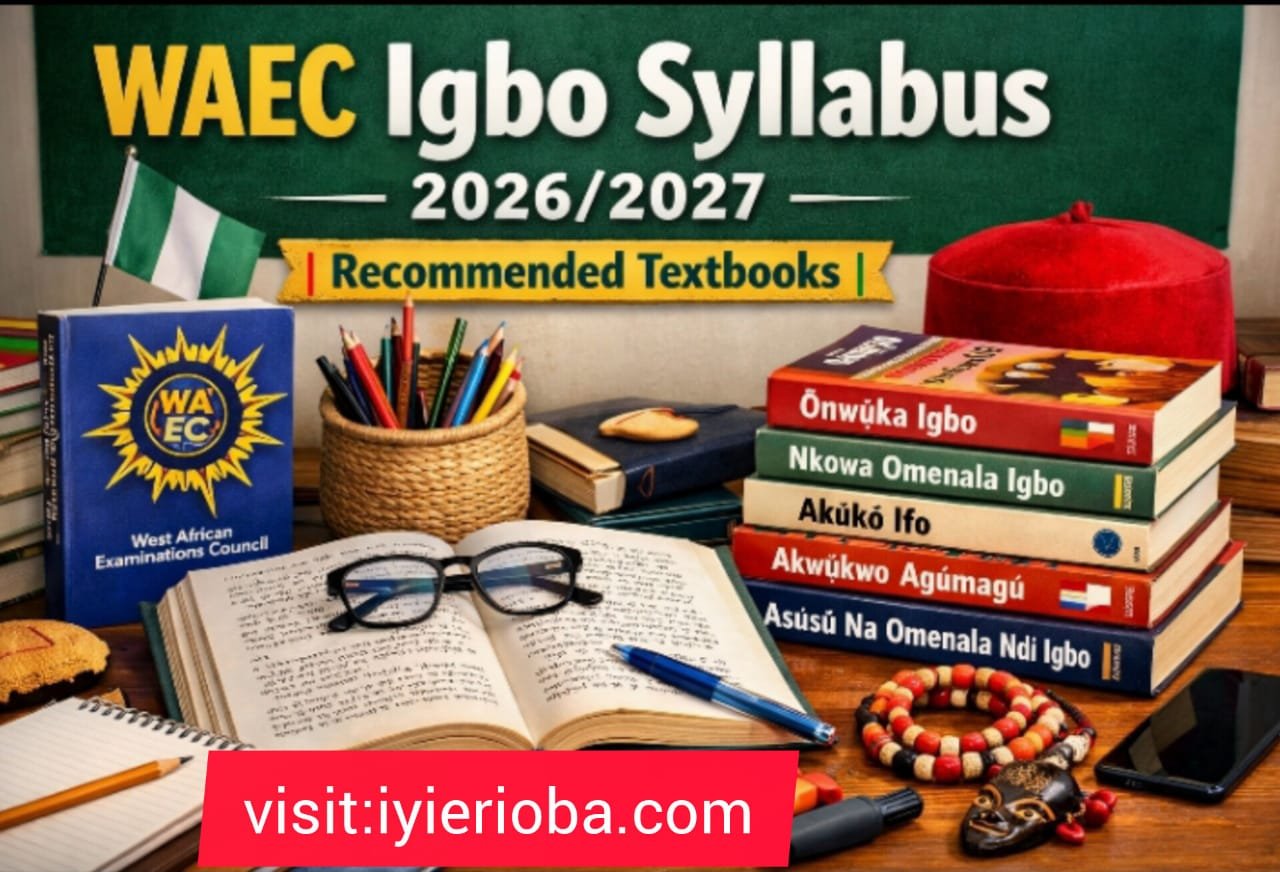
Are you an Igbo speaking WAEC Candidate, If yes then The WAEC Igbo Syllabus 2026/2027 is here for you. Designed to strengthen proficiency in the Igbo language, culture, and literature, the WAEC Igbo syllabus equips students with the linguistic, cultural, and analytical skills required for academic success and effective communication.
This comprehensive guide explains the WAEC Igbo examination structure, detailed syllabus content, learning objectives, and recommended textbooks, helping students, teachers, and parents understand what to expect and how best to prepare for the examination.
TABLE OF CONTENT
1. Overview of the WAEC Igbo Syllabus 2026/2027
2. Objectives of the WAEC Igbo Syllabus
3. Objectives of the WAEC Igbo Syllabus
4. WAEC Igbo Syllabus 2026/2027 (Detailed Breakdown)
5. WAEC Igbo Syllabus 2026/2027 Textbooks
6. Tips for Scoring High in WAEC Igbo and Conclusion
READ ALSO:
WAEC English Language Syllabus 2026/2027 | Recommended Textbooks
WAEC Civic Education Syllabus 2026/2027 | Recommended Textbooks
WAEC Animal Husbandry Syllabus 2026/2027 | Recommended Textbooks
Overview of the WAEC Igbo Syllabus 2026/2027
The WAEC Igbo syllabus focuses on three core areas which students should make sure they understand very well:
-
Language Skills – comprehension, composition, grammar, sound system, and translation
-
Literature – oral and written literature, including prose, poetry, and drama
-
Culture – Igbo customs, institutions, beliefs, and traditional practices
The WAEC Igbo syllabus promotes both theoretical understanding and practical application of the Igbo language while encouraging appreciation of Igbo heritage and worldview.
Objectives of the WAEC Igbo Syllabus
After studying the WAEC Igbo syllabus, candidates are expected to:
-
Speak, read, and write Igbo fluently using standard orthography
-
Communicate effectively in both formal and informal Igbo contexts
-
Understand the sound system, grammar, and structure of the Igbo language
-
Appreciate Igbo oral and written literature
-
Demonstrate knowledge of Igbo customs, institutions, and cultural values
-
Develop creativity and critical thinking through literary analysis and composition
These objectives ensure that candidates gain both academic competence and cultural literacy.
WAEC Igbo Examination Guide (Structure)
The WAEC Igbo examination consists of two papers, taken in a single sitting. All questions and instructions are presented in Igbo language, and candidates must respond using approved Igbo language, phonetic and style.
Paper 1: Objective Test
-
Duration: 1 hour
-
Total Marks: 60
-
Format: 60 multiple-choice questions
Paper 1 is divided into three sections:
Section A: Language (30 Questions)
-
Comprehension (10 questions)
-
Composition / Letter Writing (4 questions)
-
Sound System (6 questions)
-
Grammar (6 questions)
-
Translation (4 questions)
Section B: Literature (22 Questions)
-
Principles of literary appreciation
-
Oral prose, poetry, and drama
-
Written prose, poetry, and drama
-
Questions are based on prescribed texts
Section C: Culture (8 Questions)
-
Igbo customs
-
Igbo institutions
Paper 2: Essay Paper
-
Duration: 2 hours
-
Total Marks: 100
-
Questions: Answer 6 out of 13
Paper 2 also consists of three sections:
2026/2027 WAEC Igbo Syllabus (Detailed Breakdown)
A. Language
Part I: Composition / Letter Writing
Candidates choose one topic and write approximately 300 words. Essay types include:
-
Narrative
-
Descriptive
-
Argumentative
-
Expository
-
Dialogue
-
Debate
-
Letter writing
Part II: Sound System
Topics include:
-
Igbo phonemes (vowels, consonants, syllabic nasal)
-
Syllable structure
-
Sound processes (vowel harmony, assimilation, elision)
-
Tone and tone notation
-
The Igbo alphabet
Part III: Grammar
Candidates are tested on:
-
Spelling rules
-
Word formation
-
Igbo dialects and Standard Igbo
-
Loan words and metalanguage
-
Word classes (noun, verb, pronoun, etc.)
-
Tense, number, and person
-
Phrases, clauses, and sentence structure
-
Direct and indirect speech
-
Punctuation
B. Literature
Part I: Oral Literature
Candidates answer one question based on prescribed texts. Areas include:
-
Definition and characteristics of oral literature
-
Folktales (ifo)
-
Proverbs (ilu)
-
Riddles (agwụgwa)
-
Poems (abụ)
-
Songs (uri)
-
Myths and legends
-
Oral drama and chants
Part II: Written Literature
Candidates attempt one question from:
-
Prose
-
Poetry
-
Drama
All questions are based on approved WAEC texts.
C. Culture
This section tests candidates’ understanding of Igbo cultural life, including:
Customs (Omenala)
-
Dressing, greetings, festivals
-
Marriage rites and childbirth ceremonies
-
Traditional games and dances
-
Beliefs, taboos, and moral values
Institutions (Ewumewu)
-
Family and traditional leadership
-
Age grades and secret societies
-
Economic institutions
-
Religious practices and sacred objects
-
Traditional occupations and crafts
WAEC Igbo Syllabus 2026/2027 Textbooks
WAEC recommends the following texts for effective preparation:
-
New School Igbo Language Books
-
Oral Literature Collections
-
Written Prose such as “Juo Obinna” by Tony Ubesie
-
Approved poetry and drama texts listed by examination years
Students are advised to use multiple textbooks to gain broader exposure and deeper understanding.
Tips for Scoring High in WAEC Igbo
-
Practice writing essays using correct Igbo orthography
-
Read prescribed literature texts thoroughly
-
Master tone marks and sound patterns
-
Study Igbo proverbs, idioms, and oral traditions
-
Revise cultural topics with real-life examples
-
Attempt past WAEC questions regularly by visiting http://www.Myschool.ng for CBT TEST on all Subjects.
NOTE: Candidates are advised to always visit the official WAEC PORTAL https://www.waeconline.org.ng/ FOR UPDATED Information.
Conclusion
The 2026/2027 WAEC Igbo Syllabus provides a well-structured framework for mastering Igbo language, literature, and culture. With the right study materials, consistent practice, and a clear understanding of the examination format, candidates can excel and earn excellent grades.
Whether you are a student, teacher, or parent, this guide serves as a reliable roadmap to success in WAEC Igbo.