
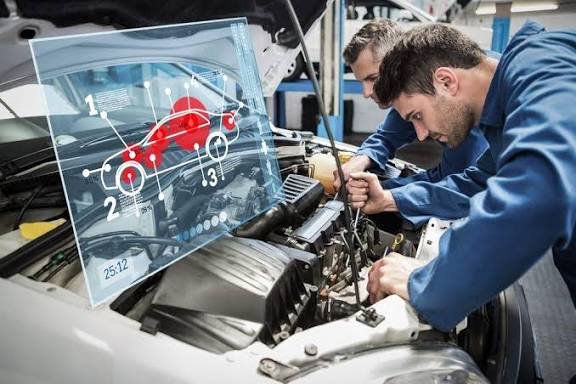
For Auto Mechanical Students only, are you a WAEC candidate? Then The WAEC Auto Mechanical Work Syllabus 2026/2027 is designed to equip secondary school students with essential theoretical knowledge and practical skills in automotive technology, follow the guide carefully to understand everything you need to know for the upcoming WAEC Auto Mechanics Examination.
ABOUT AUTO MECHANICAL WORK
As the automobile industry continues to expand across Africa, technical and vocational subjects like Auto Mechanical Work have become increasingly valuable for students seeking employable skills, entrepreneurship opportunities, or further technical education.
This comprehensive guide explains everything candidates, parents, and teachers need to know about the WAEC Auto Mechanical Work examination, including aims and objectives, examination format, detailed syllabus topics, workshop tools and equipment, and the best recommended textbooks for effective preparation.
Overview of WAEC Auto Mechanical Work Syllabus
WAEC Auto Mechanical Work is a vocational trade subject offered under the West African Senior School Certificate Examination (WASSCE). It focuses on the maintenance, repair, and servicing of motor vehicles, blending classroom instruction with hands-on workshop experience.
The 2026/2027 Auto Mechanical Work syllabus is structured to help students:
-
Understand how vehicle systems function
-
Apply safe workshop practices
-
Use tools and equipment correctly
-
Diagnose and fix common mechanical faults
This makes it suitable for students interested in automotive engineering to build positive energy to study in, technical colleges, polytechnics, or self-employment as auto technicians.
SEE ALSO:
WAEC Auto Body Repairs Syllabus 2026/2027 | Recommended Textbooks
WAEC Block Laying, Brick Laying & Concrete Works Syllabus 2026/2027 | Recommended Textbooks
WAEC Basketry Syllabus 2026/2027 | Recommended Textbooks
Aims and Objectives of Auto Mechanical Work
The WAEC Auto Mechanical Work syllabus is guided by clear educational and practical objectives. By the end of the course, candidates should be able to:
-
Demonstrate a solid understanding of automobile mechanical concepts
-
Correctly identify and use automotive tools and workshop equipment
-
Carry out basic vehicle servicing, maintenance, and repair tasks
-
Observe proper workshop safety rules and regulations
-
Develop problem-solving skills related to vehicle fault diagnosis
-
Prepare for industrial attachment and real-world automotive work environments.
These objectives ensure that learning goes beyond theory and prepares students for real automotive practice.

WAEC Auto Mechanical Work for 2026/2027 Examination Guidelines
The Auto Mechanical Work examination consists of three compulsory papers, designed to test both theoretical knowledge and practical competence.
Paper 1: Objective Test
-
Format: Multiple-choice questions
-
Number of questions: 40
-
Duration: 45 minutes
-
Total marks: 40
This paper tests basic understanding of automotive principles, tools, safety practices, and system functions.
Paper 2: Theory (Short-Structured Questions)
-
Number of questions: 6
-
Candidates answer: Any 4
-
Duration: 1 hour
-
Total marks: 60
Questions require explanations, diagrams, and problem-solving based on the 2026/2027 WAEC Auto Mechanical Work syllabus.
Paper 3: Practical Examination
-
Format: Hands-on practical test
-
Duration: 2 hours
-
Questions: 3 practical tasks
-
Candidates answer: Any 2
-
Total marks: 90
A list of required materials is supplied to schools at least two weeks before the exam.
Alternative to Practical
Where tools or equipment are unavailable, an alternative written practical may be conducted:
-
Two compulsory essay questions
-
Duration: 2 hours
-
Total marks: 100
Industrial Attachment Requirement
Students are required to undergo industrial attachment during the long vacation between SS II and SS III. This practical exposure is:
-
Supervised by subject teachers
-
Assessed as part of continuous assessment
-
Awarded 10 marks
This component enhances real-world skills and employability.
WAEC Auto Mechanical Work Syllabus for 2026/2027 Textbooks
Below is a structured breakdown of the major topics covered in the syllabus.
1. Workshop Safety and Regulations
-
Meaning of safety and workshop rules
-
Common causes of workshop accidents
-
Accident prevention methods
-
Safety devices such as fire extinguishers, first aid kits, safety signs, and sand buckets
2. Tools and Equipment
-
Types and uses of:
-
Measuring tools
-
Marking tools
-
Holding tools
-
Cutting tools
-
-
Maintenance of workshop tools
-
Introduction to machine tools and hand-operated equipment
3. Vehicle Layout
-
Types of vehicle chassis
-
Major vehicle components and their functions
-
Engine, transmission, and chassis arrangement
-
Chassis inspection and maintenance
4. Automobile Engine
-
Types of engine designs
-
Identification of engine components
-
Two-stroke and four-stroke engine cycles
-
Spark ignition and compression ignition engines
-
Engine servicing and routine maintenance
5. Transmission System
-
Layout of transmission systems
-
Types of drives
-
Components such as:
-
Clutch
-
Gearbox
-
Propeller shaft
-
Differential
-
-
Manual and automatic transmission basics
6. Suspension System
-
Functions of suspension systems
-
Types of suspension
-
Fault diagnosis and repairs
7. Steering System
-
Steering components and functions
-
Manual and power-assisted steering
-
Steering geometry (camber, caster, toe-in, toe-out)
-
Steering faults and corrections
8. Engine Lubrication System
-
Purpose of lubrication
-
Types of lubrication systems
-
Lubricants, viscosity, and oil quality
-
Friction and wear reduction
9. Cooling System
-
Water and air cooling systems
-
Components of cooling systems
-
Comparison of cooling methods
10. Fuels and Combustion
-
Fuel supply system layout
-
Carburetors and fuel pumps
-
Types and properties of fuels
-
Mechanical vs electrical fuel pumps
11. Manifold and Air Cleaner
-
Functions of manifolds
-
Types of air cleaners
-
Mufflers and exhaust flow
12. Braking System
-
Principles of braking
-
Mechanical and hydraulic brakes
-
Fault diagnosis and maintenance
-
Anti-lock Braking System (ABS)
13. Wheels and Tyres
-
Types of tyres and rims
-
Tyre pressure regulations
-
Wheel balancing and alignment
-
Vulcanizing process
14. Workshop Management and Enterprise
-
Basic management concepts
-
Resource control
-
Enterprise ownership types
-
Automobile business opportunities
Materials and Equipment for Auto Mechanical Work Workshops
Proper tools are essential for effective training and examination preparation.
Measuring Tools
-
Vernier calipers
-
Micrometers
-
Dial gauges
-
Tyre pressure gauges
Machine Tools
-
Bench grinders
-
Valve grinding machines
-
Grinding machines
Lubrication Bay and Tyre Services
-
Air compressors
-
Wheel balancing machines
-
Tyre changers
-
Vulcanizing equipment
General Servicing Tools
-
Hydraulic jacks
-
Torque wrenches
-
Engine hoists
-
Diagnostic testing machines
Safety and Utility Equipment
-
Fire extinguishers
-
Workshop overalls
-
Engine charts
-
Complete vehicle assemblies
WAEC Auto Mechanical Work 2026/2027 Textbooks
The following textbooks are widely accepted for WAEC preparation and technical training:
-
Motor Vehicle Technology – J.A. Dolan
-
Motor Vehicle Technology (Parts 1–4) – S.C. Mudd
-
Automotive Mechanics – William H. Crouse & Donald L. Anglin
-
Fundamentals of Motor Vehicle Technology – V.A.W. Hillier & Peter Coombes
-
Automotive Mechanics for Schools and Colleges – A.B.A. N. Ejembi & Stephen David
These books cover both theory and practical illustrations aligned with WAEC standards. Students are advised to Practice Past Questions as it helps them Renew and Test their knowledge about the subject, Visit http://www.Myschool.ng for an Online CBT TEST.
Why Studying Auto Mechanical Work Is a Smart Choice
-
High demand for automotive technicians
-
Strong foundation for technical careers
-
Encourages entrepreneurship
-
Practical, hands-on skill development
-
Supports self-employment after graduation
Final Thoughts/ Conclusion
The WAEC Auto Mechanical Work Syllabus 2026/2027 | Recommended Textbooks provides a structured pathway for students to gain valuable automotive skills while preparing for academic success. With the right textbooks, proper workshop exposure, and consistent practice, candidates can excel in both the written and practical examinations. Every Candidate should ensure they visit the official WAEC Portal https://www.waecnigeria.org/ for Updated information. We wish you Good luck as you prepare for the upcoming Examination, Cheer’s!!!